
If you have an S&P 500 index fund, chances are you believe you are buying ownership stakes in 500 companies representing virtually every facet of the American economy: technology, finance, healthcare, energy and so forth. That is how index funds are pitched, and how they've been marketed as a risk-off, sleep-at-night cornerstone of any portfolio.
The problem is this pitch quietly became outdated sometime before early 2026. Seven stocks now make up roughly a third of the index. The ten largest are close to 40%, the highest on record, having touched nearly 41% at the end of 2025. And the 20 largest firms are worth nearly half of it combined. Buying the "whole market" means you are making a concentrated bet on a handful of the largest tech names.
This isn't necessarily bad, but it's not what many investors assume when they buy in. It's something you should be aware of before the next market setback, not during it.
How concentrated is it really?
The numbers are genuinely unprecedented. The Magnificent Seven (Apple, Microsoft, Nvidia, Alphabet, Amazon, Meta, and Tesla) made up about a third of the index's market value at the start of 2026, roughly 34%. The top ten sit close to 40%. That puts the 20 largest stocks at nearly half of the entire S&P 500's market capitalization.
Nvidia alone is the largest single name, at about 7% of the index. To put that into perspective, one chipmaker is now worth more than the entire energy sector, or the entire utilities sector. The ten largest firms combined are worth more than $20 trillion.
For comparison, during the dot-com bubble the top ten holdings in the S&P 500 represented only about 27% of the index at their peak. Today's level, near 40%, is roughly half again as high as that previous extreme. We are in uncharted territory, full stop.
How does this happen with a "diversified" index fund?
It has everything to do with how the index is constructed. The S&P 500 is market-capitalization weighted: the bigger a company gets, the bigger its stake in the fund becomes. If Nvidia's market value triples, the index fund automatically increases its weighting, buying more of that stock on your behalf. The winners keep growing, and the index keeps adding to them.
This creates a feedback loop. Money flows into index funds, those funds buy big stocks in proportion to their weight, that buying pushes the big stocks higher, which increases their weight further still. It's a logically consistent rule for indexing that happens to produce unintended concentration in periods when a few stocks perform unusually well for years in a row. For a fuller breakdown of how index funds and ETFs work, we've outlined it here.
What happens when one of them cracks?
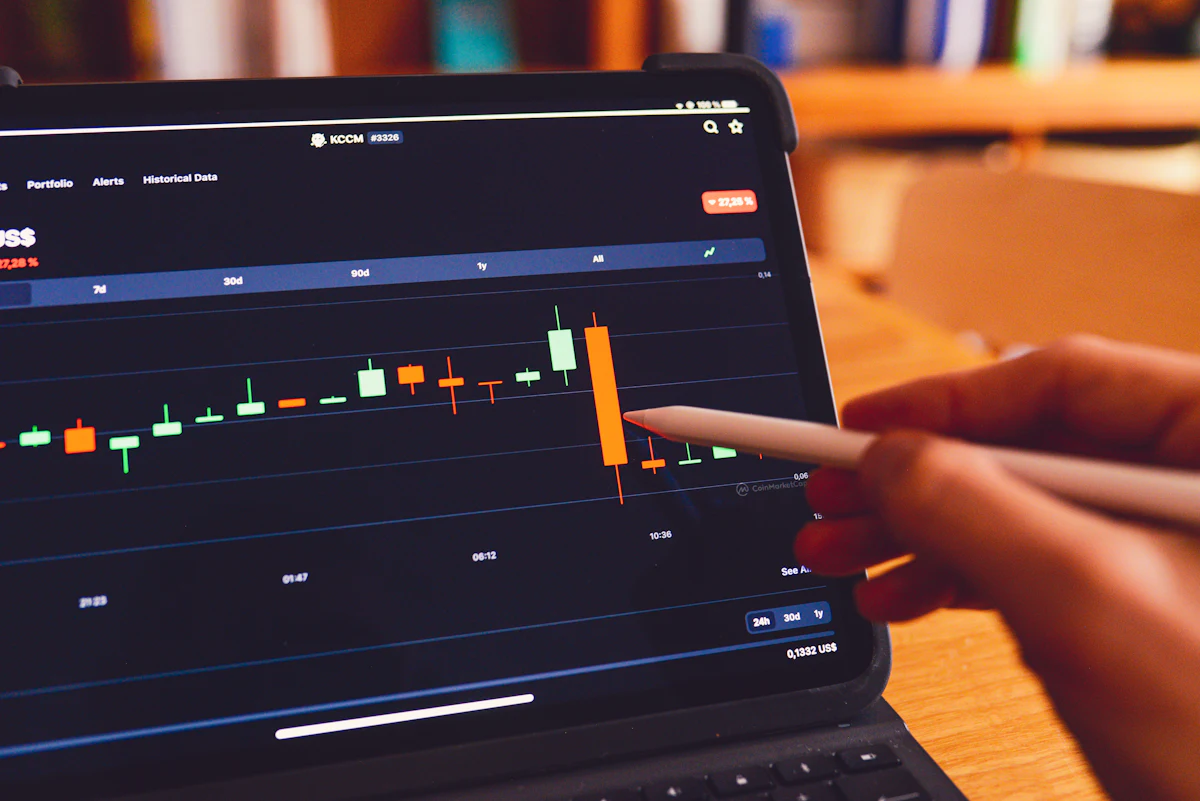
This is the central question, and we can be very concrete about it. Because Nvidia is now about 7% of the index, a 30% drop in its share price (by no means unusual for a single stock during a bad quarter) can knock roughly 2% off your "diversified" index fund on its own, all else being equal. During a bad week, the Magnificent Seven combined could pull the S&P 500 down by the high single digits while the other 493 stocks barely move.
This is the invisible risk of these vehicles. During the recent rally, concentration has been a gift: a few giants did all the heavy lifting and brought index-fund owners along for the ride. During a correction, the same dynamic works in reverse. You are far more exposed to the fate of AI-driven megacaps than the word "diversified" implies. It's an advantage in the good times and a vulnerability in the bad times, and you have no way of choosing which mode applies when a crisis hits.
There's a second-order effect, too. Because so much money sits in index funds that buy mechanically, a decline in the megacaps could force those funds to sell across the entire index to meet redemption requests, which then drags down smaller stocks that had nothing to do with the problem. Concentration on the way in can become a chain reaction on the way out. There has been no major test at these levels, and that fact is precisely what unnerves strategists.
Is this another dot-com bubble?
It doesn't look like it, for some important reasons. In 2000, most of the top performers in the S&P 500 were built on hype with little substance, and many were burning through cash. By 2026, the largest firms are hugely profitable: they generate real revenue and significant free cash flow. That provides reason for a measure of calm.
There is one significant qualification, though. At the end of 2025 the ten largest stocks accounted for about 41% of the index's market value while producing only around 32% of its earnings. That gap, paying a 41% price for a 32% share of the profits, tells you investors are betting on substantial future growth that has yet to materialize. Back in January 2026, strategists at J.P. Morgan flagged the index's concentration as a systemic risk, noting its unusual fragility in the face of any setback to its megacap names.
In short: these companies may be stronger than in 2000, but they are also more expensive, trading at prices predicated on future success. Both things can be true at once.
What should I do about it?
For many long-term investors, the answer is nothing at all. Attempting to time the top of a megacap rally has historically led people to miss the market's strongest days. But there are calmer ways to think about your exposure:
- Understand what you are holding. If your diversified core and your individual tech positions largely overlap within those same seven names, you are taking on concentrated risk without fully realizing it.
- Consider an equal-weight version. An equal-weight S&P 500 fund gives every stock the same stake, so Nvidia is held in the same proportion as the smallest member. You give up some of the upside when megacaps run, and take on less of the pain if they fall.
- Broaden your horizons. Bonds, smaller stocks, and international equities aren't tied to the same seven names. That brings us to a broader debate about how the biggest investors allocate their capital.
None of this is an argument against index funds. They remain among the cheapest, most accessible ways to own a stake in the world's most valuable companies, and they have delivered solid returns for people who invested consistently. If you're new to all this, our guide to getting started covers the basics first.
One simple conclusion remains: an S&P 500 index fund in 2026 is no longer the evenly diversified bet it was even ten years ago. It is a concentrated wager on a small number of very large tech companies. That bet can be quite profitable in good times and highly problematic in bad ones. Either way, you deserve to know which one you are making.
Sources
- RBC Wealth Management — The 'Great Narrowing': S&P 500 concentration
- The Motley Fool — Should Investors Be Worried That the "Magnificent Seven" Make Up 35% of the S&P 500?
- MarketMinute — J.P. Morgan warns of systemic 'tipping point' as concentration hits records
- Westmount Fundamentals — S&P 500 Top 10 Holdings by Weight (2026)