
Most people can use the word "share" their whole lives without anyone ever telling them what one actually is. So before any talk of apps or index funds, start there, because once the basic machinery clicks, the rest of investing stops looking like a foreign language.
What a share really is
A company that wants to grow needs money. It has two ways to get it: borrow it, or sell off pieces of itself. A share is one of those pieces, a single unit of legal ownership in the business.
Make it concrete. Say a company divides itself into 100 million shares. Buy one and you own one hundred-millionth of the entire business: its factories, its brand, its cash, and crucially its future profits. If the company earns £200 million in a year, your one share has a claim on £2 of that. Some of those profits may be paid straight to you as a dividend; the rest is reinvested to make the company bigger, which is what pushes the value of your share up over time. Owning the share usually also gives you a vote at the company's annual meeting.
That is the whole engine. When you hear a share price went "up," it just means other people now value that little claim on the company's future profits more highly than they did yesterday. Everything else, the jargon and the flashing screens, sits on top of that one idea.
Where shares come from
A company sells shares to the public for the first time in an event called an IPO (initial public offering). It carves itself into millions of shares, sells a chunk of them, and pockets the cash to grow.
Here is the part almost nobody explains, and it trips up every beginner. After that first sale, when you buy a share, your money does not go to the company. It goes to whoever sold the share to you, another investor. You are trading second-hand ownership with other people. The company raised its money once, at the start; everything after that is the shares changing hands between investors who disagree about what they are worth.
So what is the "stock market"?
It is simply the marketplace where that second-hand trading happens, venues like the London Stock Exchange or America's Nasdaq. And a share price is not a number set by some authority. It is just the last price a buyer and a seller agreed on.
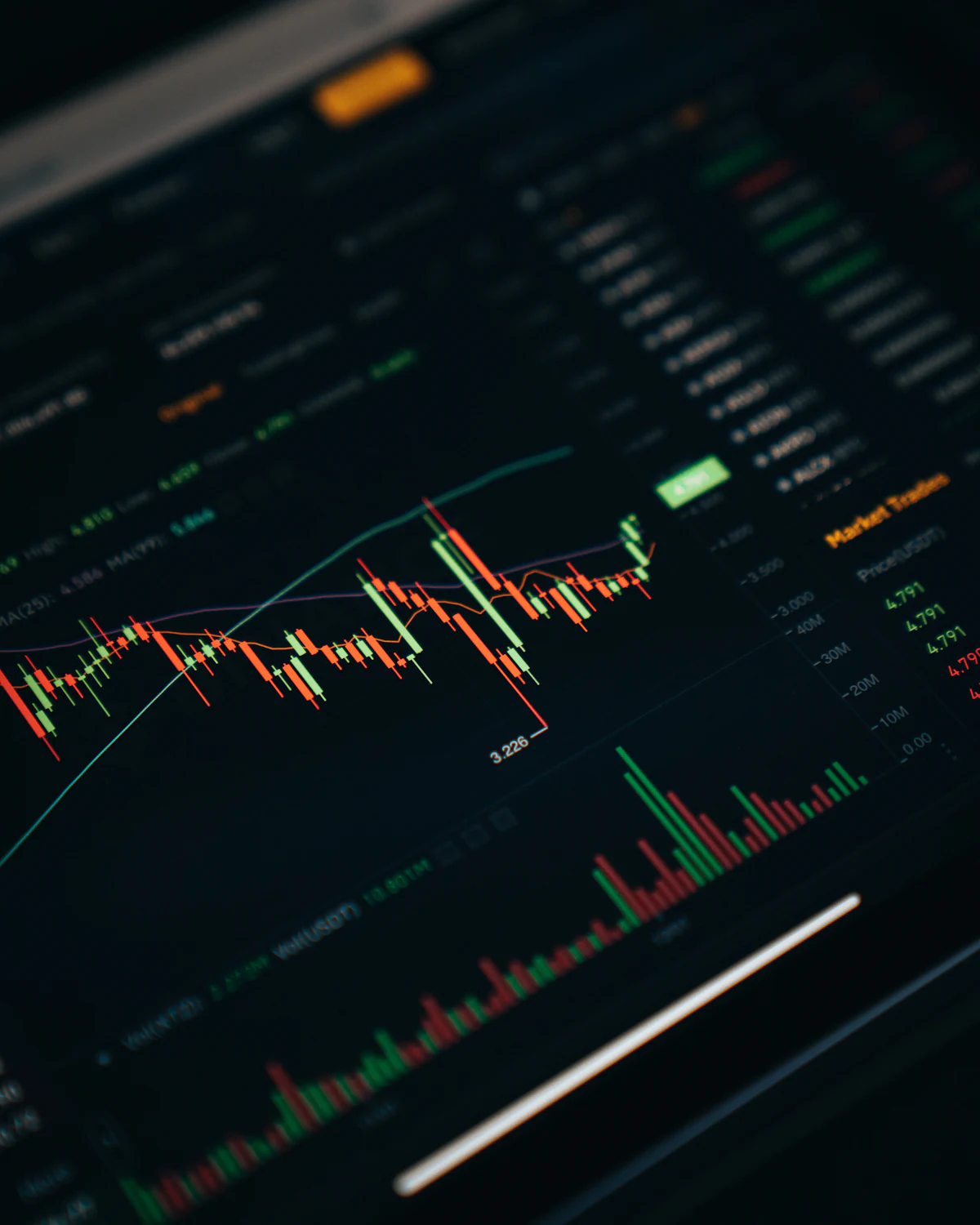
At any moment there is a highest price someone is willing to pay (the bid) and a lowest price someone is willing to sell for (the ask). When those two meet, a trade happens, and that becomes the new price. The figure you see ticking up and down all day is nothing more than that agreement being struck over and over, thousands of times a second.
What makes the price move
In the short term, supply and demand, driven by news and mood. A strong earnings report, an interest-rate decision, a rumour, a single analyst changing their mind: anything that makes more people want in than out, or the reverse. Day to day the market is a mood machine reacting faster than any human can read, which is why trying to trade those swings is a losing game for most people.
In the long term, one thing dominates: profits. Because a share is a claim on future earnings, its price ultimately tracks how much money the company is expected to make. The shorthand for this is the P/E ratio, the price divided by annual earnings per share, which tells you how many pounds you are paying for each pound of yearly profit. Pay 25 and you are betting on strong growth ahead; if that growth fails to show up, the price drifts back down to earth.
The indices everyone quotes
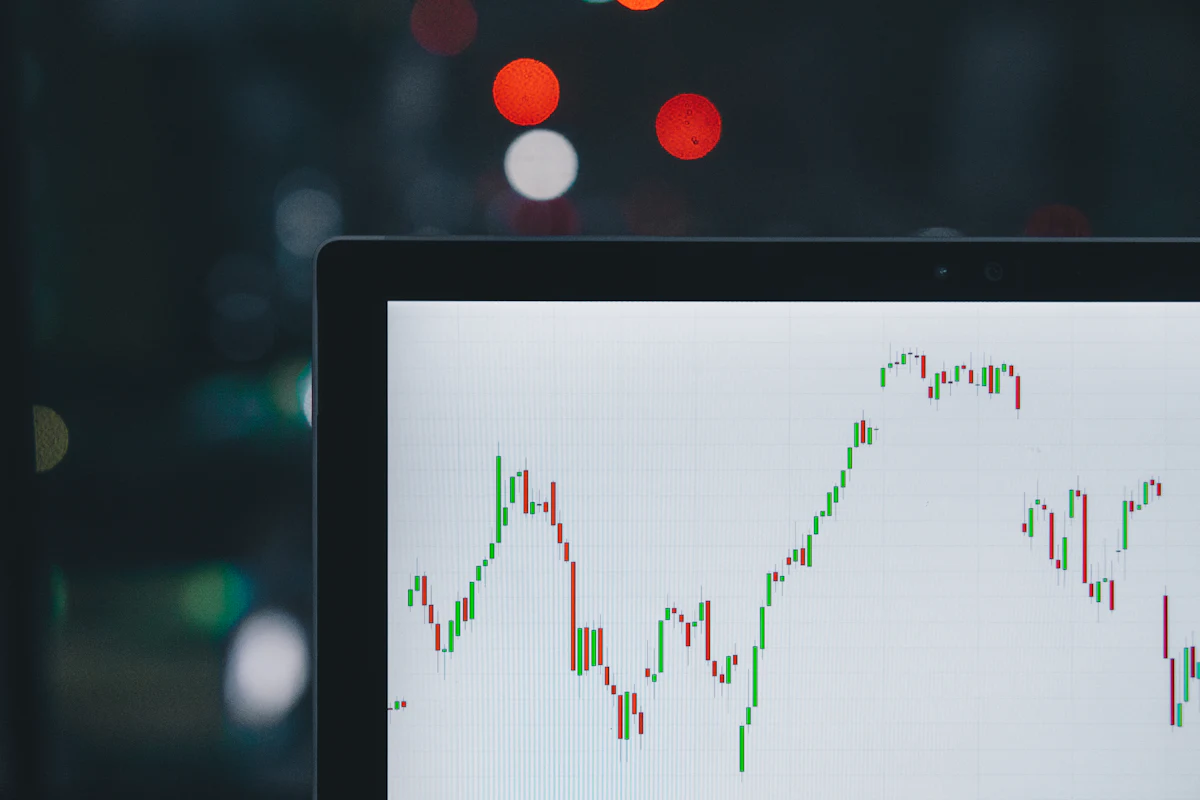
Nobody tracks all of it, so people watch baskets of companies instead. The S&P 500 bundles 500 of the largest US firms, the FTSE 100 the hundred biggest in Britain, and global indices hold thousands of companies across dozens of countries in a single line. When the news says "the market was up," it almost always means one of these baskets. They are weighted by size, so the handful of giants at the top move them far more than the tiddlers at the bottom.
Why you probably shouldn't pick your own
Now the practical bit. You do not have to choose winning companies, and the odds say you should not try. The reliable route is a fund that buys an entire index in one go, an index fund or ETF. One purchase and you own a sliver of hundreds or thousands of businesses, for a fee as low as 0.05% a year.
The case for it is blunt. Over 15 years, nearly 9 in 10 professional fund managers fail to beat a simple index, even though beating it is their entire job. Markets are crowded with full-time experts analysing the same companies you would be Googling at midnight, and consistently knowing more than all of them is brutally hard. Buying the whole market sidesteps the contest completely.
Use the tax-free account first
Before you buy a single fund, choose the kind of account it sits inside, because that quietly decides how much of your gains you keep. Most countries offer one where your investments grow untaxed, and it should come first.
- In the UK, a Stocks and Shares ISA shelters up to £20,000 a year, with every gain and dividend inside it tax-free for life.
- In the US, a 401(k) or an IRA does a similar job, and a workplace 401(k) often comes with an employer matching part of what you put in, which is as close to free money as investing gets.
- A plain taxable account has no limit but no shelter, so most people fill the sheltered one first.
How you open an account and buy
You sign up with a broker or investment platform. For someone starting small, the commission-free apps are the cleanest entry point and now let you buy fractional shares, so a £50 deposit can still buy a piece of a £400 fund. Once you are in, the steps are almost dull: choose your account, deposit by bank transfer, search for the fund, and buy.
You will meet two order types. A market order buys right now at the best available price; a limit order only buys if the price drops to a number you set. For a long-term index fund a market order is fine, because you are not trying to nail the exact penny. The habit that builds the wealth is boring and automatic: put a fixed amount in every month, whatever the headlines are doing, so you are not forever waiting for the "right" moment that nobody can pick.
The one real edge you have
Markets fall. Sometimes 20%, occasionally 30% or more, and it always feels like the one that will not come back. The professionals managing other people's money often cannot sit through it, because their clients panic and pull cash at the bottom. You are under no such pressure. You can keep buying through the downturn and wait, and history has rewarded the patient: someone who bought a broad index at the worst possible moment before the 2008 crash and simply held would be comfortably ahead today.
That patience, repeated for years, is the actual strategy, not the stock tips and not the timing. Put money in, pick a sensible mix of assets, and leave it alone. The mechanics take an afternoon to learn. The results take years, and they tend to reward whoever treats investing as a long, dull habit rather than a casino.
This article is meant to provide general information and is not financial advice.
Sources
- S&P Dow Jones Indices — SPIVA: active vs. passive scorecards
- GOV.UK — Individual Savings Accounts (ISAs)
- IRS — 401(k) Plans