

For a long time, buying crypto meant opening a separate account on a Centralized Exchange like Coinbase or Kraken or creating a web 3 wallet and buying from a Decentralized Exchange like Uniswap. Both having their own respective problems, from writing down a seed phrase and hoping you never lose it, to stressing every time you heard about another exchange getting hacked.
That's changing.
Between January 2024 and March 2026, the SEC approved spot ETFs for four major cryptocurrencies — Bitcoin, Ethereum, Solana, and XRP. All four are now available in a standard brokerage account, like Fidelity or Schwab. No seed phrase. No exchange account. No custody risk.
How did we get here?
How We Got Here
Bitcoin was first. January 2024, after years of the SEC blocking every attempt, spot Bitcoin ETFs finally got approved. BlackRock, Fidelity, and others launched funds that pulled in billions within weeks.
Ethereum followed in July 2024. Then in October 2025, Solana followed — only the third cryptocurrency to ever get a spot ETF approved in the U.S.
XRP came next. Canary Capital launched XRPC on November 13, 2025. It pulled in around $250 million in assets on its very first day of trading and posted $59 million in volume — the highest first-day number of any ETF launched that year. Not just crypto ETFs. Any ETF.
Then in March 2026, the SEC and CFTC jointly classified XRP as a digital commodity, the same legal category as Bitcoin. That was the final unlock. Grayscale (GXRP), 21Shares (TOXR), and REX-Osprey (XRPR) all launched their own XRP funds shortly after. The XRP ETF complex has since grown to seven funds with a combined ~$1.4 billion in assets.
The Solana Angle Nobody's Talking About
Most of these ETFs work the same way — the fund holds the asset, you get price exposure. Solana is different.
Earlier in 2026, the SEC clarified that staking crypto on-chain isn't considered a securities offering. That one ruling changed things considerably for Solana. Funds like Bitwise's BSOL (NYSE) and VanEck's VSOL now pass on Solana's native staking yield directly to shareholders — currently running at around 6 to 7% per year.
Think about that for a second. You're sitting in your brokerage account, holding an ETF, and it's paying you yield the way a bond does. The REX-Osprey Solana Staking ETF (SSK, Cboe) works the same way. BSOL alone saw $57 million in volume on its first day.
That's a genuinely new thing.
What Actually Changes for You?
The practical difference is bigger than it sounds on paper.
Before, if you wanted XRP or SOL, you were on your own. Set up an account, pass the KYC checks, fund it, buy the token, figure out whether to leave it on the exchange or move it to a wallet. And if something went wrong — a hack, a delisting, a lost password — that was your problem.
ETFs take all of that off the table. The fund handles custody. Your shares sit in your normal brokerage account, regulated and insured through SIPC like any other investment. If you have a brokerage IRA, you could theoretically hold Solana or XRP exposure inside a retirement account.
Tax reporting gets simpler too. ETF shares are taxed like stocks. No more tracking cost basis across 40 wallet transactions.
The trade-off is real though — you don't actually own the crypto. You can't send it, use it in DeFi, or move it anywhere. If that matters to you, an ETF isn't the same thing as holding the asset. But for people who just want price exposure without the hassle, the argument for going through an exchange is getting harder to make.
Where Prices Are Right Now
As of June 1, 2026:
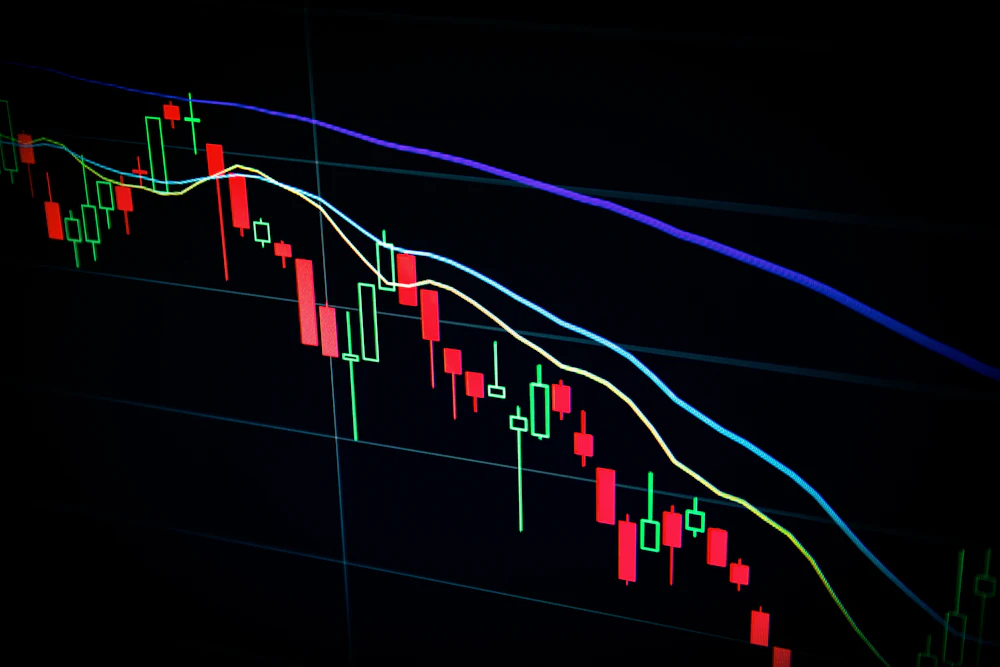
- XRP is around $1.34, down from highs above $3 earlier this year
- Solana (SOL) is around $82, off its Q1 highs
- Ethereum (ETH) is near $2,000, under pressure despite steady institutional inflows
The price dips haven't slowed the ETF inflows much. Money has continued flowing into these funds even as spot prices pull back.
What Comes Next
Litecoin already has a spot ETF trading in the U.S., having launched in late 2025. Dogecoin is there too — Grayscale (GDOG), Bitwise (BWOW), and 21Shares (TDOG) all launched between November 2025 and January 2026. Combined AUM across the three is still around $15 million, which tells you institutional appetite for DOGE hasn't really shown up yet — but the regulatory path is cleared.
On the staking side, Nasdaq has filed a proposed rule change to list a JitoSOL ETF — a fund built around Solana's liquid staking token — which would take the yield story even further.
Over 100 crypto-linked ETFs are expected to launch in the U.S. before the end of 2026. A year ago that would have sounded crazy, now the tides have turned.