


For a moment this week, the very interesting thing has happened: Tether's USDT — a stablecoin whose entire purpose is to never be worth more than a dollar — briefly carried a larger total market capitalization than Ethereum, the blockchain that supports most of the crypto economy and normally holds the second-highest market cap, after Bitcoin. Headlines framed it as a historic crossover, the first time USDT has out-valued ETH in nearly eight years. It sounds like proof that "boring" stablecoins are quietly eating the crypto world's most important smart-contract platform.
The reality is far less dramatic — and far more revealing about where crypto sentiment actually sits in mid-2026.
So What Happened?
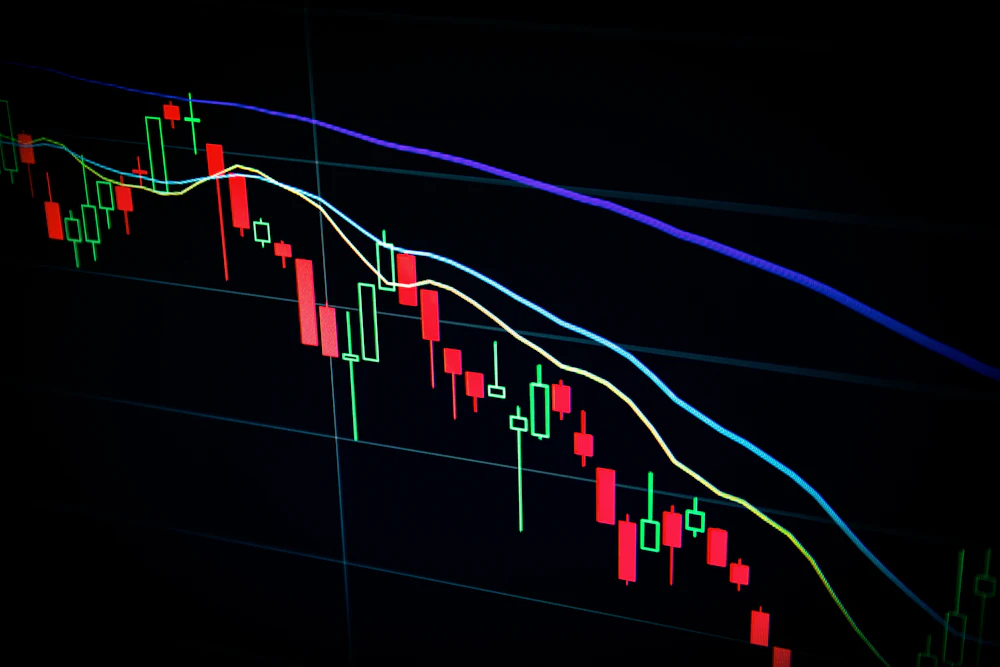
According to data tracked by KuCoin and Yellow.com, USDT's marketcap touched around $187 billion on June 6 while Ethereum's fell to about $185–186 billion — a difference of less than $1 billion. Ethereum clawed back to around $188 billion later that same day and reclaimed its spot as the second-largest crypto asset by market cap, behind Bitcoin. The "flip" lasted barely long enough to screenshot.
That's the part the headline glosses over: Tether didn't pump past Ethereum so much as Ethereum briefly dumped to meet it. USDT is, by design, pegged to the U.S. dollar — its market cap moves only when Tether mints or burns tokens, not because traders are bidding the asset up. Ethereum's price, by contrast, is volatile and reactive to sentiment. So a "USDT overtakes ETH" headline is really describing one asset standing still while another stumbled toward it — a definitional quirk more than a structural shift.
Why Ethereum Stumbled

The drop wasn't random. Crypto has been in a broad risk-off mode — the kind that recently sent Bitcoin tumbling below $60K and triggered $1.57 billion in liquidations across 32 coins. The market's Fear & Greed Index sank to 12 — "extreme fear" — on June 6, with roughly $110 billion wiped from total crypto market cap in a single 24-hour stretch around the same time. Bitcoin's dominance now sits near 56% of the total market, even as the overall stablecoin sector has slipped from its April peak of roughly $321 billion to about $312 billion — a sign that capital isn't rotating into altcoins so much as leaving the asset class altogether, or huddling in the most liquid, "safest" instruments available.
Ethereum has absorbed an outsized share of that pullback. Total value locked in Ethereum-based protocols — a rough gauge of how much capital is actively deployed on the network — has fallen to around $36 billion, as traders unwind leveraged positions and pull liquidity out of decentralized finance. That combination — a falling token price plus shrinking on-chain activity — is what let a stablecoin's flat valuation briefly slide past it.
The "Stablecoin Season" Story — Treat the Predictions as Predictions
The flip has reignited talk of a 2026 "stablecoin season," with some prominent voices framing it as the start of something bigger — echoes of the same boom-bust whiplash we saw when Bitcoin's $73K run had everyone arguing about whether the bull market was back. Bloomberg Intelligence senior strategist Mike McGlone argues that capital is "gravitating toward stability and utility," and that stablecoins look attractive "as a store of value and settlement asset when conviction fades" — going so far as to suggest Tether's assets under management could top Ethereum's this year and eventually challenge Bitcoin's. Longtime Bitcoin skeptic Peter Schiff made a similar case on social media on June 4, arguing that growing demand for "stable digital dollars" could eventually push USDT's market cap past both Ethereum's and Bitcoin's.
Worth holding both predictions loosely. Strategists and outspoken commentators have incentives — audience, positioning, narrative — that don't always align with what actually happens in volatile markets. The McGlone/Schiff framing also skips over an awkward detail: USDT's market cap mostly grows when Tether issues more tokens, which generally happens because more dollars are flowing into exchanges to be parked — not because the asset is "winning" against Ethereum in any meaningful sense. A stablecoin "overtaking" a smart-contract platform isn't a like-for-like contest. It's closer to comparing a parking garage's total capacity to the value of the cars currently driving past it.
What This Means for You
- Don't read the flip as a verdict on Ethereum. Market cap rankings shift constantly during volatile stretches, and this one reversed within the same day — a reminder that, as we've seen with Bitcoin's last four crashes, single-day snapshots rarely tell the real story. Ethereum remains the dominant smart-contract platform by a wide margin on most other metrics.
- Watch capital flows, not headlines. The Fear & Greed Index sitting at 12 and $110 billion vanishing from the market in a day says far more about sentiment than which asset's market cap edges out another by a few hundred million dollars on a given afternoon.
- Treat "X will overtake Y" predictions as claims, not forecasts. McGlone's and Schiff's calls may prove directionally right over a long horizon, but neither comes with a testable timeline, and both have a track record of bold, headline-friendly predictions that don't always land on schedule.
- If you're holding ETH, the more useful number is the roughly $36 billion in total value locked — a better gauge of whether the network's actual usage is recovering than where its market cap happens to sit relative to a dollar-pegged token on any given afternoon.